Alert: Your browser does not support full functionality of our app and you may experience certain errors. We recommend that you use Chrome, Firefox or Internet Explorer Edge instead.
Friki is one of those words that comes from English but has little to do with the original word. Freaky means 'strange' or so strange it's scary. But friki in Catalan, as I understand it, means a person who is passionate about something, often unusual, closer to a geek, but not limited to technology. “She's a friki about comic books", for example, or in my case, composting. As if passion were a bad thing, something embarrassing, something you should hide. But it's not. Maybe I'm finally realizing it. For too long I've felt like I've had to hide my passions, wait until I had a whole book to justify them. But enough already, I want to explain them now, while I do them, maybe inspire some other friki person to want to change things.
You know why? Because if we sequester more carbon in the soil, we have the possibility of reversingclimate change. Just like that. It's the only thing that gives me hope for the planet these days. And while the amount of carbon I put back into the earth is minuscule, if I write about it, maybe I'll inspire someone else to do it too.
And what's more, I'll have strawberries! This comes from a sign I saw one day in Bristol: Gardening is the most therapeutic and defiant act you can do, especially in the inner city, plus, you get strawberries!
The combination of synthetic fertilizers and pesticides and a regime of constant tillage leaves our soil empty and dead. Like dust. Unable to absorb water, susceptible to erosion. And unable to support the plants that want to grow in it. Soil is not sand, it is not clay, it is a world. In fertile soil there are trillions of organisms that do the essential job of decomposing organic material so that plants can use it. Microbes work in concert with fungi to transport nutrients to the roots of plants. If we kill everything, there is no one to do this job.
The answer is to nourish the soil so that it is full of these microorganisms, stop tilling so that the fungi necessary to do the work we need them to do are there and return carbon to the soil where it belongs.
I want to tell you all the things I do with these goals in mind: Composting all the organic leftovers of my life. I mean all of them. I don't burn anything, I don't throw away anything organic, not even into the municipal organic waste. If it has ever lived, I put it back in my compost and then back into my garden. And I try to do it as easy and efficiently as I can.
We need to talk about
composting (mixing carbon sources (sawdust, straw, dry leaves) with nitrogen sources (garden and kitchen waste, coffee grounds, garden weeds) to facilitate decomposition and the creation of compost, an organic material that, when added to the garden, provides nutrients and microbes that nourish the soil.
bokashi (preferring organic kitchen waste to facilitate its decomposition, cultivating many good bacteria and microbes for the compost pile, and heating and therefore giving a boost to decomposition)
biochar (burning things that are too hard to compost in a reasonable time frame (reasonable to me!) without oxygen and thus creating a pure carbon material, which thanks to the pyrolysis process is full of small holes where microbes can be stored and be within the reach of plants. Before adding biochar to the garden, those little holes must be inoculated (filled) with nutrients and microbes.
leaf mold (set aside a pile of leaves for one or more years, preferably with a little water so that they decompose thanks to fungi and generate 'leaf soil', a material that can absorb four times its weight in water, and add structure and organic material to the soil)
mulch (sawdust, straw, leaves, cardboard, wool) which is used to cover the space around plants in the garden to maintain soil moisture and make it difficult for weeds to grow
Korean natural farming (KNF) (a system of cultivating indigenous microorganisms (IMO) to populate and nourish the soil and thus help plants grow better
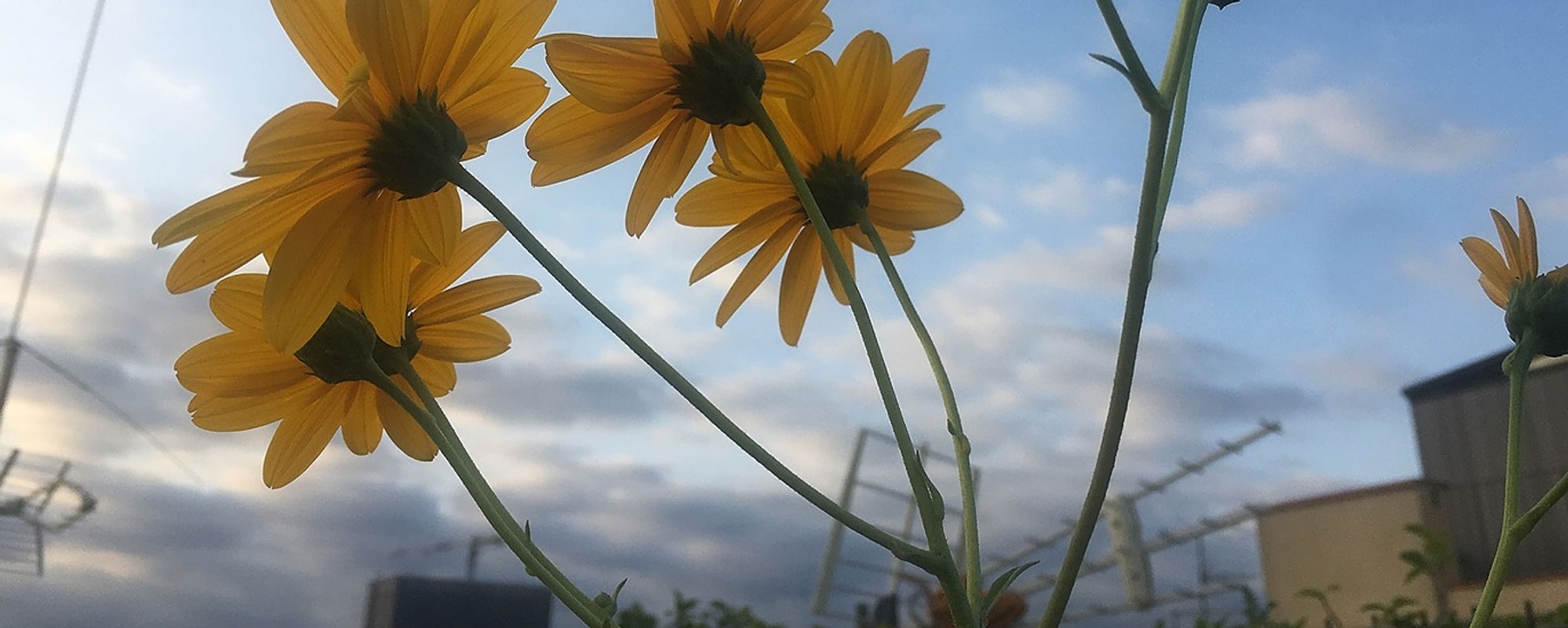
I also want to talk about other related things: the importance of flowers, and how to grow them, why it is important to cut them, which plants serve as natural dyes, how to make cuttings from your neighbors' plants, how to collect seeds from your plants and your friends' plants.
There are so many things to know and learn. I'd love to show you all the friki things I do. And that you join me!



Write a comment
Log in with your account or sign up to add your comment.